Can MacBook Air M3 Run Fortnite Smoothly?
This article explores whether the MacBook Air M3 can run Fortnite smoothly, analyzing its hardware and gaming performance.
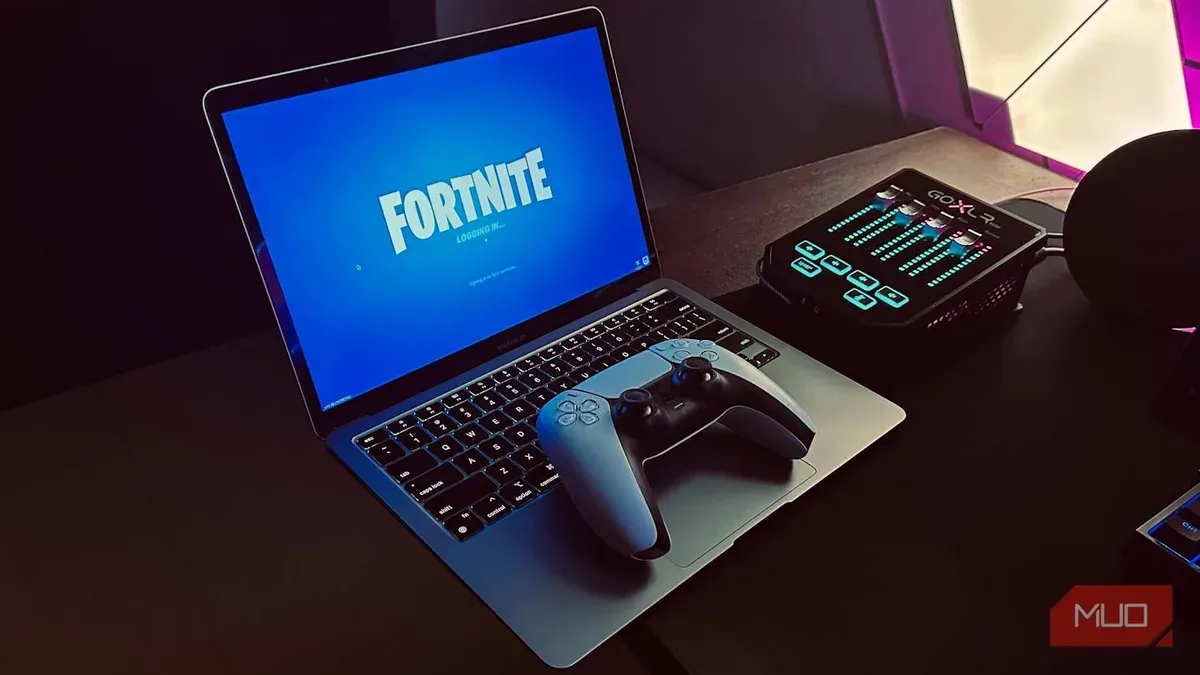
MacBook Air M3 owners often ask if their device can run Fortnite with good performance. This article clarifies the technical and practical aspects of playing Fortnite on this Apple laptop, helping users decide if it fits their gaming needs.
Understanding Fortnite’s System Requirements on macOS
Epic Games provides official minimum and recommended specifications for Fortnite on Mac. The minimum system requirements typically include macOS 10.14.6 Mojave or later, an Intel Core i3 processor or better, 4 GB RAM, and at least an Intel HD 4000 GPU or equivalent integrated graphics. Recommended specs suggest a more powerful processor and 8 GB RAM for smoother gameplay.
Fortnite is compatible with macOS versions from Mojave onward, including the latest macOS releases supported by Apple Silicon chips. Fortnite runs natively on Apple Silicon through updates from Epic Games, avoiding performance penalties associated with emulation layers like Rosetta 2.
Comparing these requirements with the MacBook Air M3’s hardware, the machine exceeds the minimums comfortably. The M3 chip’s architecture and integrated GPU are newer and more efficient than the minimum Intel HD 4000 standard. macOS compatibility is fully met, enabling Fortnite to run without OS-related barriers.
| Requirement | Fortnite Minimum | MacBook Air M3 |
|---|---|---|
| Processor | Intel Core i3 or equivalent | Apple M3 chip (ARM-based, 8-core CPU) |
| Graphics | Intel HD 4000 or better | M3 integrated GPU with 10 cores |
| RAM | 4 GB | 8 GB or 16 GB LPDDR5 |
| Operating System | macOS 10.14.6+ | macOS Ventura or later |
MacBook Air M3 Hardware Breakdown and Gaming Potential
The MacBook Air M3 features Apple’s latest chip design with an 8-core CPU and a 10-core integrated GPU. This GPU design provides improved performance over previous integrated graphics, enabling smoother frame rendering and better handling of modern games like Fortnite.
RAM configurations start at 8 GB of fast LPDDR5 memory, which supports multitasking and gaming without frequent slowdowns. While more RAM can help in multitasking scenarios, 8 GB is generally sufficient for Fortnite.
One limitation is the fanless design of the MacBook Air M3. Without active cooling, sustained gaming sessions may cause thermal throttling, where the CPU or GPU reduces clock speeds to prevent overheating. This results in lower frame rates and less consistent performance during extended play, especially in graphically demanding scenes.
Thermal throttling typically begins after 15-20 minutes of continuous high GPU load. Users can monitor this by checking the "Performance" tab in Activity Monitor or using third-party tools to observe CPU/GPU clock speeds and temperatures. Reducing graphics settings or taking breaks can help manage thermal constraints.
Real-World Fortnite Performance on MacBook Air M3
Fortnite runs smoothly on the MacBook Air M3 at low and medium graphics settings, delivering stable frame rates suitable for casual play. At low settings, frame rates generally remain above 50 FPS, while medium settings average around 40-50 FPS depending on scene complexity and background processes.
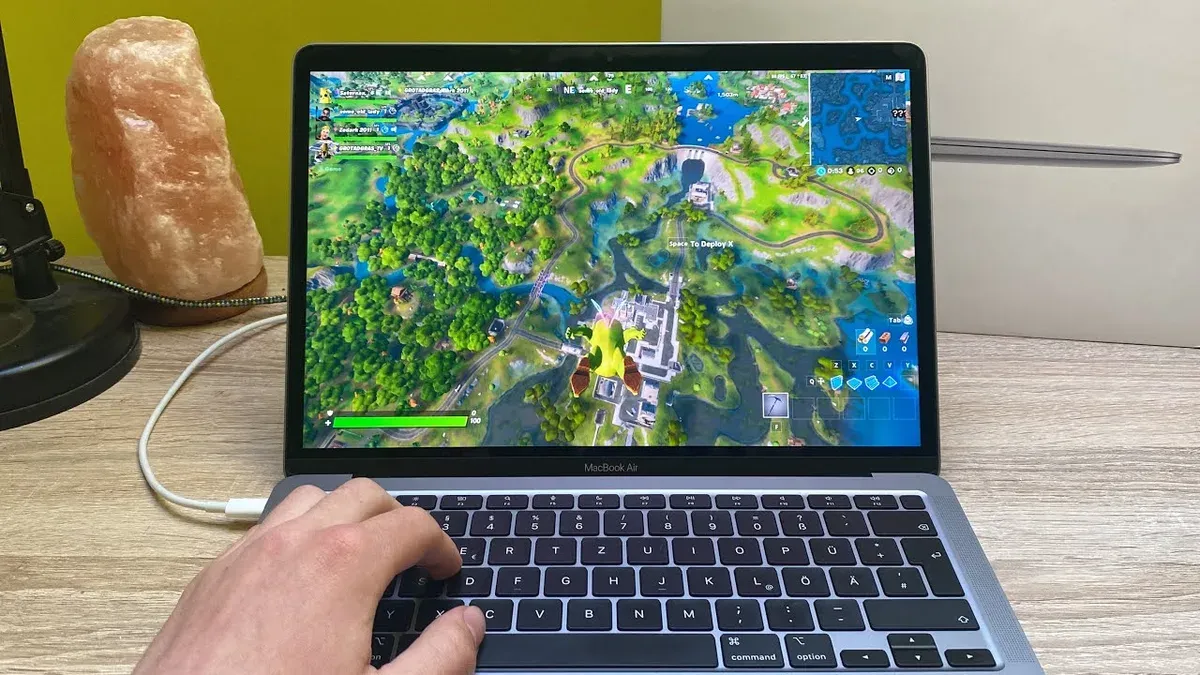
High graphics settings push the hardware beyond its optimal range, causing frame rate dips and occasional stutters during intense action. Users should expect some performance variability due to thermal throttling and the integrated GPU's limits.
Load times are reasonable, with game startup and map loading completing without significant delay. Compared to older MacBook Air models, the M3 shows a clear improvement in both frame rate and graphical fidelity. However, gaming laptops with discrete GPUs still outperform the MacBook Air M3, particularly in high settings and competitive scenarios.
Casual players will find the experience enjoyable and stable, but competitive gamers may notice limitations in responsiveness and frame consistency due to the MacBook Air's hardware constraints and thermal design.
Optimizing Fortnite Gameplay on MacBook Air M3
To maximize Fortnite performance on the MacBook Air M3, users should adjust in-game graphics settings to balance visuals and smoothness. A recommended starting point is:
- Graphics quality: Medium
- Resolution: Native Retina resolution or slightly reduced (e.g., 1680x1050)
- Shadows: Off or Low (shadows significantly impact GPU load)
- View distance: Medium
- Effects and post-processing: Low
Managing background applications is crucial. Closing browser tabs, unnecessary apps, and disabling resource-heavy utilities frees system resources and helps maintain frame stability.
Using external peripherals such as a USB or Bluetooth mouse with lower latency can enhance control response compared to the built-in trackpad. A wired headset also improves communication quality.
Gaming is resource-intensive and drains battery quickly. Connecting to power and enabling macOS battery optimization settings can prolong session length without performance drops. Note that running on battery may trigger macOS power management to reduce performance to conserve energy.
Step-by-step optimization checklist:
- Open Fortnite settings and set graphics quality to Medium.
- If frame rates drop below 40 FPS, reduce resolution incrementally.
- Turn off shadows and lower post-processing effects to reduce GPU load.
- Close all non-essential background apps via Activity Monitor to free RAM and CPU.
- Connect an external mouse and keyboard if preferred for better input responsiveness.
- Plug in the MacBook Air to avoid battery-related performance throttling.
Who Should Consider Playing Fortnite on MacBook Air M3 and Who Should Not
Casual Fortnite players who prioritize convenience and portability will find the MacBook Air M3 suitable for enjoyable gameplay. It handles standard matches well and supports typical player needs.
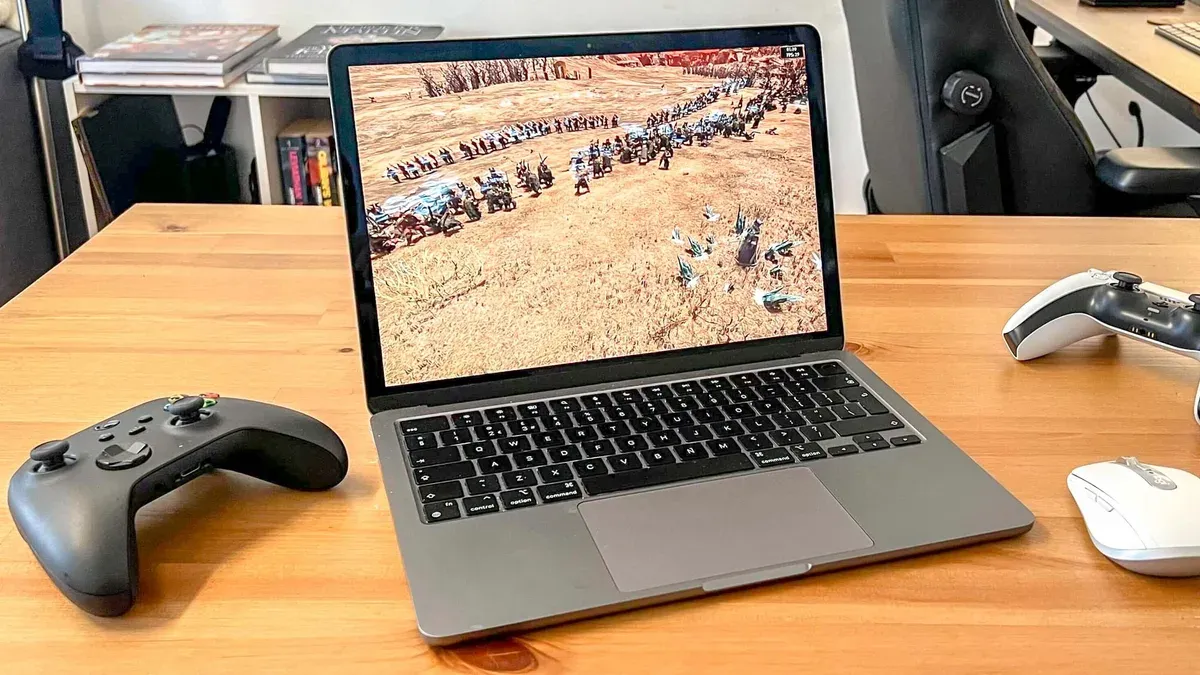
Competitive players who demand higher and more consistent frame rates, lower latency, and advanced graphical settings may find the MacBook Air M3 limiting. For these users, devices with dedicated GPUs and active cooling are recommended.
Alternatives include gaming laptops or desktops with discrete graphics cards or playing Fortnite through cloud gaming services on compatible devices, though the latter is outside the scope of this article.
The MacBook Air M3 is best suited for users seeking an all-purpose laptop with moderate gaming capability rather than a dedicated gaming machine.
Known Caveats and Final Notes
This analysis does not cover playing Fortnite via cloud gaming platforms or using Windows emulation layers on the MacBook Air M3. These methods can produce different performance results and may involve additional latency or compatibility issues.
Frequently Asked Questions
Can I install Fortnite natively on MacBook Air M3 or do I need workarounds?
Fortnite can be installed natively on MacBook Air M3 using the Epic Games Launcher designed for macOS. No workarounds or emulation are necessary.
What graphics settings should I use for smooth Fortnite gameplay on MacBook Air M3?
Medium graphics quality with shadows off, reduced post-processing, and native or slightly lowered resolution balance visuals and smoothness effectively.
Will playing Fortnite drain my MacBook Air M3 battery quickly?
Yes, gaming is resource-intensive and will drain the battery faster than typical use. It is advisable to play while connected to power for optimal performance and session length.
Are there any known compatibility issues or bugs when playing Fortnite on MacBook Air M3?
No widely reported compatibility issues exist with Fortnite on the MacBook Air M3 when using the latest macOS and game versions. Regular updates from Epic Games address minor bugs.