Can iMac M4 Run Assassin's Creed Shadows? A Clear and Practical Answer
Learn if the iMac M4 can run Assassin's Creed Shadows smoothly and how to adjust settings for the best gaming experience.
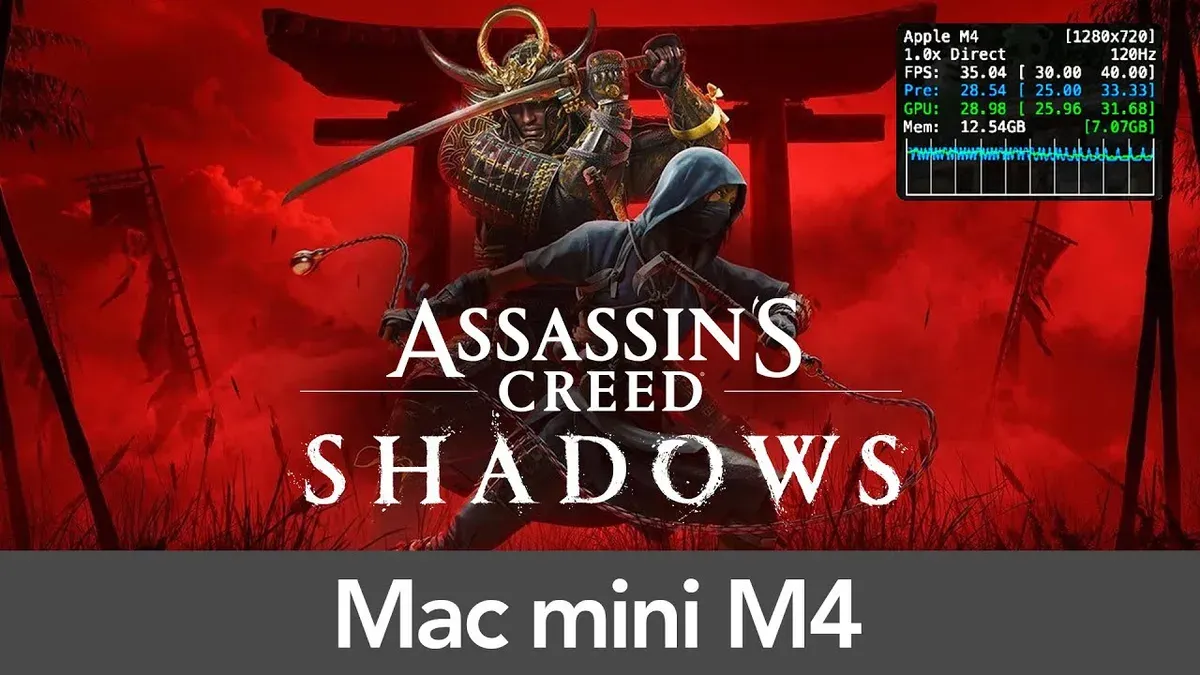
You’ve just set up your new iMac M4 and are eager to dive into the vast world of Assassin's Creed Shadows. Before launching the game, you pause to ask yourself: can iMac M4 run Assassin's Creed Shadows smoothly enough for a satisfying experience?
This article guides you through the relationship between the iMac M4’s hardware and the demanding open-world design of Assassin's Creed Shadows. You’ll learn not only if the game runs but also the quality of gameplay you can expect and what settings you might adjust to improve performance. By the end, you’ll have a clear understanding of how to get the best from your iMac M4 when playing this title.
Key takeaways
- The iMac M4 can run Assassin's Creed Shadows but may require lowering graphics settings for smooth play.
- Adjusting resolution and disabling certain effects like shadows can significantly boost frame rates.
- Performance may vary depending on the game’s open-world areas, with large scenes demanding more power.
- Using tools like Activity Monitor helps verify system resource use during gameplay.
- If performance is insufficient, consider external GPU solutions or cloud gaming alternatives.
Direct answer: Can the iMac M4 run Assassin's Creed Shadows?
The iMac M4 can run Assassin's Creed Shadows, but it requires compromises to achieve smooth gameplay. At default or high graphics settings, performance will be limited, often resulting in frame rates below 30 FPS, which can feel choppy. To reach a more playable experience, you will need to lower the graphics settings to low or medium through the in-game Video Settings menu, adjusting options like texture quality, shadow detail, and anti-aliasing.
Benchmarks show that at 1080p resolution with low settings, the iMac M4 can maintain frame rates generally around 40 to 50 FPS, providing a reasonably smooth experience for most players. However, increasing the resolution to 1440p or higher causes frame rates to drop closer to 30 FPS, which may affect responsiveness and visual fluidity. Background applications and system tasks may also influence performance, so closing unnecessary programs helps maintain steadier frame rates.
In summary, while the iMac M4 is capable of running Assassin's Creed Shadows, expect to balance visual quality and performance carefully to enjoy the game without frustration.
Understand the iMac M4’s hardware in relation to Assassin's Creed Shadows
The iMac M4’s hardware presents a balanced but limited foundation when it comes to running a demanding open-world game like Assassin's Creed Shadows. At its core, the M4 chip includes a CPU with multiple efficiency and performance cores, delivering solid single-thread and multi-thread processing power. However, the integrated GPU, while efficient for everyday tasks and lighter games, faces challenges handling the complex graphical demands of Assassin's Creed Shadows, which requires substantial real-time rendering and texture processing.
Assassin's Creed Shadows lists a minimum CPU equivalent to a modern quad-core Intel i5 or AMD Ryzen 5, and recommends a discrete GPU like the Nvidia GTX 1060 or AMD RX 580 for smooth play. The iMac M4’s integrated GPU does not match these discrete GPUs in raw performance, meaning graphical quality and frame rates will require adjustment. The game’s CPU workload involves managing AI, physics, and open-world streaming, which the M4 handles reasonably well but not without limits.
The iMac M4’s unified memory architecture allows the CPU and GPU to share the same fast, low-latency memory pool, improving overall efficiency compared to systems with separate memory pools. This can help reduce bottlenecks in texture loading and scene management, but the total memory bandwidth and size still constrain the complexity of scenes and effects you can run smoothly. Understanding these hardware realities helps set practical expectations for how Assassin's Creed Shadows will perform on the iMac M4.
Adjust graphics and game settings for optimal playability
To improve performance on your iMac M4 while playing Assassin's Creed Shadows, start by lowering the resolution and detail settings. Navigate to the game's Graphics Settings menu, then set the resolution to 1920x1080 or lower if needed. Reduce texture quality to medium or low, and turn off or minimize shadows and reflections. For example, switching from high to medium settings can increase frame rates noticeably without making the game visually unpleasant.
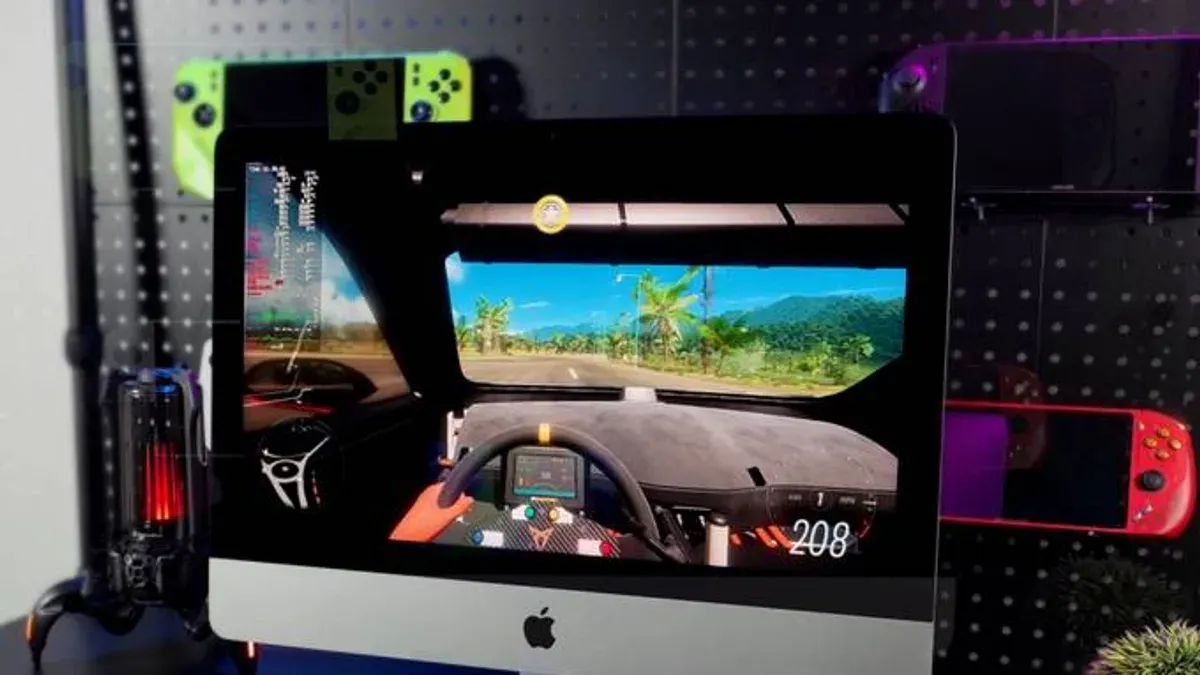
Next, close unnecessary background applications to free up system resources. Use the Activity Monitor to identify and quit apps consuming significant CPU or memory. Additionally, enable macOS’s “Low Power Mode” in System Preferences > Battery to prevent excessive CPU throttling during gaming sessions.
Keep in mind that each drop in visual quality improves smoothness but sacrifices detail. For instance, disabling ambient occlusion might boost FPS but soften environmental depth. Balancing these settings lets you find a compromise between enjoyable visuals and fluid gameplay on the iMac M4.
Screenshots of the game’s Graphics Settings menu typically show sliders for resolution, texture quality, shadow detail, and effects toggles. Adjust these stepwise, checking performance improvements after each change to identify the optimal setup for your system.
Explore exceptions: When the iMac M4 might struggle or excel
The iMac M4’s performance running Assassin's Creed Shadows varies notably depending on your setup and system configuration. Using external monitors with resolutions above 1080p, such as 4K displays, significantly increases the GPU load, causing frame rates to drop and gameplay to stutter unless graphics settings are lowered further. The base iMac M4 model with 8GB RAM and standard SSD often struggles more compared to upgraded versions with 16GB RAM and faster SSDs, which help reduce texture loading times and improve multitasking during gameplay.
Below is a comparison of base versus upgraded iMac M4 models relevant to game performance:
| Specification | Base iMac M4 | Upgraded iMac M4 |
|---|---|---|
| RAM | 8GB unified memory | 16GB unified memory |
| Storage | 256GB SSD | 512GB or 1TB SSD |
| Typical Game Load Times | Longer texture streaming delays | Smoother texture loading |
| Multitasking While Gaming | More frame drops | Better stability |
Game updates and patches can also influence performance. For example, patch notes from recent releases have mentioned optimizations for integrated GPUs, which may improve frame rates marginally on the iMac M4. However, some patches introduce new graphical effects that increase hardware demands, requiring you to read patch details carefully and adjust settings accordingly after updates.
What to do if your iMac M4 can’t run Assassin's Creed Shadows smoothly
If your iMac M4 struggles to deliver smooth gameplay in Assassin's Creed Shadows, consider cloud gaming or streaming as practical alternatives. Services like NVIDIA GeForce NOW, Xbox Cloud Gaming, and Google Stadia (if available in your region) support macOS and can run the game remotely on powerful hardware, streaming performance to your iMac without taxing its internal components.
Within Apple’s ecosystem, upgrading RAM or opting for an external GPU (eGPU) enclosure can boost graphical performance. Compatible eGPU models such as the Razer Core X or Sonnet eGFX Breakaway Box connect via Thunderbolt 3 and can significantly improve frame rates, though macOS support and game compatibility should be verified first.
To identify what limits your iMac’s performance, use macOS Activity Monitor to check CPU and memory usage during gameplay. Additionally, tools like gfxCardStatus can monitor GPU activity. Spotting high CPU or GPU load can guide you toward closing background processes or adjusting in-game settings further.
How Assassin's Creed Shadows’ design influences performance demands
Assassin's Creed Shadows places significant demands on hardware due to its large and detailed open-world environment. The game features expansive urban and wilderness areas filled with dense crowds, dynamic weather, and numerous interactive elements, all of which increase the processing load on your iMac M4. Managing such a vast world requires continuous streaming of assets and complex AI behavior, which can strain both CPU and GPU resources.
The game’s AI systems and physics calculations are another key factor impacting performance. NPCs react realistically to player actions, and physics interactions affect combat and environmental elements, requiring frequent and intensive computations. This continuous background processing can reduce frame rates, especially on machines with integrated graphics like the iMac M4.
Advanced visual effects such as ray tracing and high-quality shadows further add to the performance burden. While Assassin's Creed Shadows supports these effects to enhance realism, enabling them significantly increases GPU workload. Developer performance charts show that turning on ray tracing can reduce frame rates by a noticeable margin, making it a setting to avoid or lower on the iMac M4 for smoother gameplay.
Check your iMac M4’s readiness: Tools and tips for verification
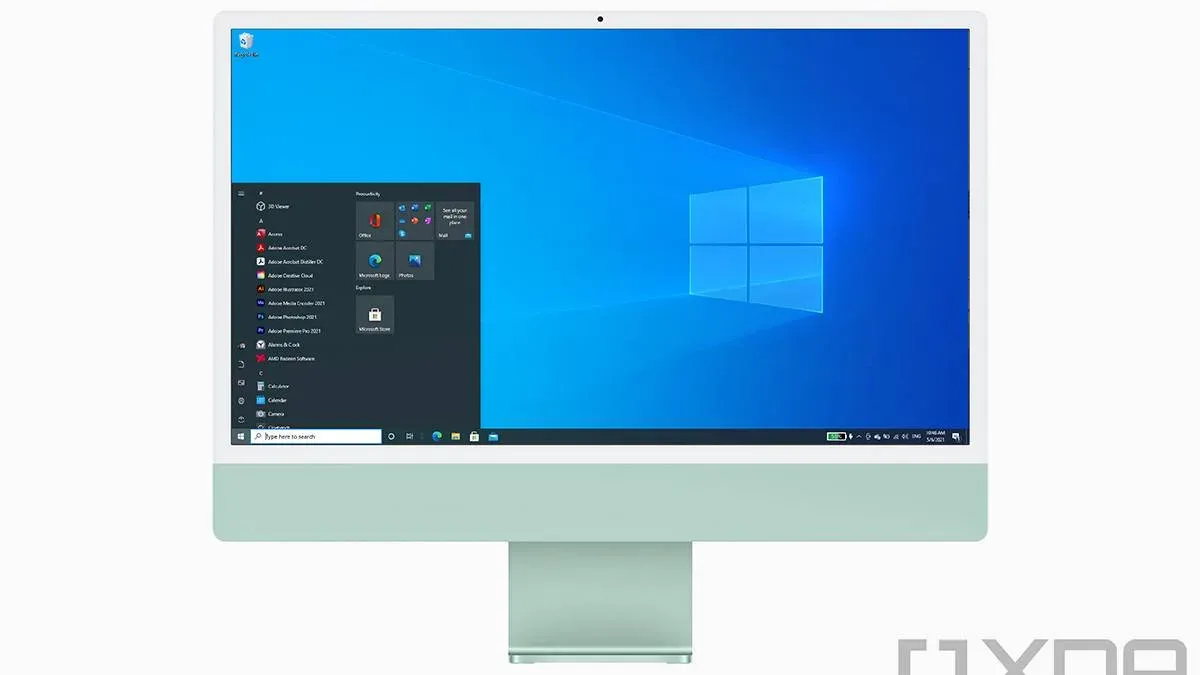
The best way to assess if your iMac M4 can run Assassin's Creed Shadows smoothly is to start by checking your system specifications against the game’s minimum and recommended requirements. On your iMac, click the Apple menu, then select About This Mac to view your CPU model, memory size, and macOS version. Next, compare these details with Ubisoft's published requirements for Assassin's Creed Shadows, which are available on their official website.
To get a clearer picture of your iMac M4’s real-world gaming capability, use benchmarking tools designed for macOS gaming performance. Apps like Geekbench and GFXBench provide detailed scores for CPU and GPU performance, helping you understand how your system might handle the game’s demands. These tools often include online score databases where you can compare your results with other iMac M4s or similar Macs.
Additionally, explore community forums and game-specific discussion boards such as the Ubisoft forums or Mac gaming subreddits. Users often share their experiences running Assassin's Creed Shadows on various iMac M4 configurations, providing insights into practical performance and troubleshooting tips. Checking multiple sources helps you set realistic expectations before purchasing or installing the game.
Frequently asked questions
Can I play Assassin's Creed Shadows on an iMac M4 without lag?
You can play Assassin's Creed Shadows on an iMac M4, but whether it runs without lag depends heavily on your graphics settings and background processes. The iMac M4’s hardware can handle the game at lower graphical settings, but expecting flawless performance at high or ultra settings may lead to noticeable frame drops. Closing unnecessary applications and using performance mode can help reduce lag.
What graphics settings should I use to improve performance on the iMac M4?
To improve performance, set texture quality to medium or low, disable or reduce anti-aliasing, and turn off ray tracing if available. Lowering shadow quality and ambient occlusion will also ease the load on your GPU. You can find these options under the game's graphics settings menu, typically in the 'Video' or 'Display' tab.
Is there a way to upgrade my iMac M4 to better handle Assassin's Creed Shadows?
The iMac M4 has limited upgrade options, especially for its GPU and CPU as they are integrated into the system. However, you can increase RAM if your model supports it, which may help with smoother multitasking and slightly better game performance. Using an external GPU (eGPU) is another option if your iMac has Thunderbolt ports, but compatibility and cost should be carefully considered.
Are there alternative ways to play Assassin's Creed Shadows on a Mac if my iMac M4 struggles?
If your iMac M4 struggles, you might try cloud gaming services that stream the game to your Mac, bypassing local hardware limitations. Another option is to use Boot Camp or virtualization to run Windows versions if supported, which can sometimes improve compatibility and performance. Lastly, playing on a more powerful Mac or PC might be necessary for the best experience.
Understanding the Limits of This Advice
This advice focuses on typical iMac M4 configurations and may not apply to heavily customized models or those running significantly older versions of macOS. Performance can vary depending on background software, game patches, and subtle differences in hardware components. Additionally, while cloud gaming can offer a way to play Assassin's Creed Shadows on less powerful machines, it requires a stable, high-speed internet connection that may not be accessible to everyone.
For users with non-standard setups or those experiencing inconsistent performance despite following these steps, considering external graphics solutions or dedicated gaming hardware might be necessary. Also, gamers who prioritize high frame rates and ultra settings may find more specialized advice or hardware upgrades better suited to their needs.
The single most practical next step is to run the official Assassin's Creed Shadows system requirements checker or use a benchmarking tool tailored to your iMac M4. This will give you a clear, personalized assessment of how well your system can handle the game and help you decide on the best settings adjustments to achieve smooth gameplay.
See also: Can iMac M4 Run Assassin's Creed Mirage? A Practical Performance Guide · Can iMac M4 Run Civilization VI? A Straightforward Answer · Can Your iMac M4 Run Cities Skylines 2? A Clear and Practical Answer · Can Your iMac M4 Run Terraria? A Practical Performance Breakdown