Does MacBook Air 15 Inch M5 Support Wi-Fi 7? A Clear Explainer
Learn whether the MacBook Air 15 inch M5 supports Wi-Fi 7 and how to optimize your wireless setup for the best performance.

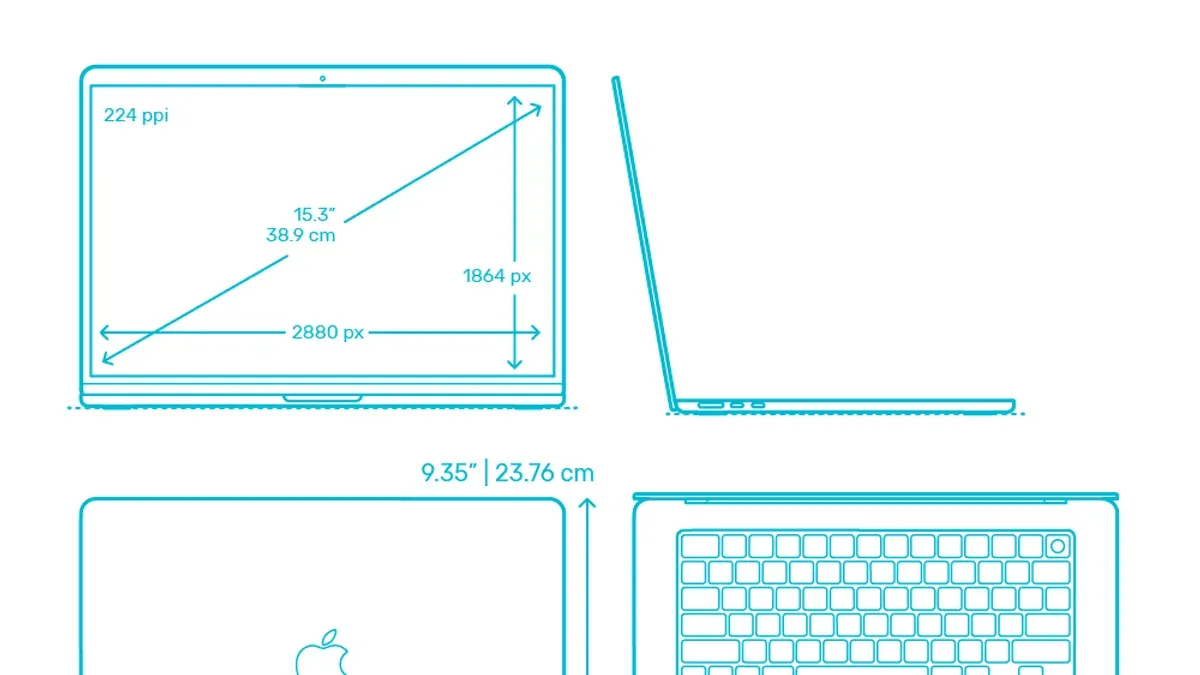
You’ve just unboxed your new MacBook Air 15 inch M5 and are setting it up for work and entertainment. Naturally, you want to make sure your wireless connection is as fast and reliable as possible, so you wonder: MacBook Air 15 inch M5 does it support Wi-Fi 7?
This article walks you through the basics of Wi-Fi 7 and how it relates to your MacBook Air 15 inch M5. Instead of jumping straight to technical specs, we’ll connect the dots between wireless standards and what you actually experience day to day. You’ll learn how to check your device’s capabilities, optimize settings, and decide whether upgrading your router or waiting makes sense.
Key takeaways
- The MacBook Air 15 inch M5 does not currently support Wi-Fi 7 but uses Wi-Fi 6E for fast wireless connectivity.
- Wi-Fi 7 offers improvements like higher speeds and lower latency, but these benefits depend on compatible routers.
- Optimizing your MacBook’s Wi-Fi settings can improve performance even without Wi-Fi 7.
- Upgrading to Wi-Fi 7 now is usually unnecessary unless you use extremely high bandwidth applications with compatible network gear.
Understand What Wi-Fi 7 Is and Why It Matters
Wi-Fi 7, officially known as IEEE 802.11be, is the upcoming Wi-Fi standard designed to deliver significantly faster wireless speeds, lower latency, and improved network capacity compared to previous generations. It aims to support maximum throughput of up to 30 Gbps, which is roughly three times faster than Wi-Fi 6's theoretical maximum of around 9.6 Gbps. This means your laptop could download large files, stream 4K or 8K videos, and handle multiple connected devices more smoothly.
For laptop users, especially those using a MacBook Air 15 inch M5, Wi-Fi 7 can reduce lag in online gaming and improve the stability of video calls, even when several devices share the same network. Latency improvements lower delays to just a few milliseconds, enhancing real-time interactions. To put this into perspective, if you often experience buffering or slow response times with Wi-Fi 6 routers, Wi-Fi 7 aims to minimize those interruptions.
Wi-Fi 7 builds on the foundation of Wi-Fi 6 and Wi-Fi 6E, which introduced features like wider channels and operation in the 6 GHz band. While Wi-Fi 6 and 6E already improved speeds and reduced interference, Wi-Fi 7 takes these benefits further by combining new technologies such as multi-link operation and enhanced modulation techniques. Understanding these advances helps you see why Wi-Fi 7 could be a worthwhile upgrade for your wireless setup.
Check MacBook Air 15 Inch M5’s Wireless Capabilities and Chipset Support
The MacBook Air 15 inch M5 comes equipped with Apple's custom-designed wireless chipset that supports Wi-Fi 6E, the standard just before Wi-Fi 7. Official specifications from Apple confirm this, showing compatibility with Wi-Fi 6 (802.11ax) and the extended 6 GHz band introduced with Wi-Fi 6E. This means your MacBook Air M5 can handle fast connections on 2.4 GHz, 5 GHz, and 6 GHz bands but does not currently support the newest Wi-Fi 7 standard.
Apple typically adopts new Wi-Fi standards in MacBooks after the technology matures and becomes widely available in networking hardware. For example, Wi-Fi 6 was introduced in MacBook models released a year or two after the standard was finalized. Wi-Fi 7 support is expected in future models rather than retrofitted to existing hardware. This is because Wi-Fi 7 requires new radio and chipset designs that cannot be enabled through software or firmware updates alone.
To visualize this, think of your MacBook Air’s wireless hardware as the radio inside a car. The current radio can tune in to FM and AM stations (Wi-Fi 6E), but it cannot suddenly pick up a new digital frequency (Wi-Fi 7) without swapping out the physical radio unit. Even if Apple releases software that could theoretically support Wi-Fi 7 features, your MacBook Air M5’s existing chipset limits you to Wi-Fi 6E speeds and capabilities.
Understand How Wi-Fi 7 Support Affects Your Everyday Use
When using Wi-Fi 7, your MacBook Air 15 inch M5 would theoretically benefit from faster data transfer and lower latency compared to Wi-Fi 6 or 6E. For example, transferring a 5GB video file over Wi-Fi 6 might take around 4–5 minutes on a typical home setup, while Wi-Fi 7 could reduce that time significantly, possibly cutting it by nearly half under ideal conditions. This means quicker uploads and downloads, smoother 4K or even 8K streaming, and more responsive video calls, especially in busy or congested network environments.
However, to experience these improvements, your network setup needs a Wi-Fi 7 compatible router and an internet connection fast enough to handle higher throughput. Without these, the speed gains remain theoretical. Also, Wi-Fi 7’s advanced modulation and multiple channels require more power, which can slightly impact your MacBook Air’s battery life and cause marginally higher device temperatures during heavy wireless use.
In practical terms, since the MacBook Air 15 inch M5 supports Wi-Fi 6E but not Wi-Fi 7, your current wireless experience balances performance and battery efficiency well. Upgrading to Wi-Fi 7 routers won’t improve your laptop’s speed until you have a device with compatible hardware. So, while Wi-Fi 7 offers promising real-world benefits, your everyday use with this MacBook Air remains optimally tuned to Wi-Fi 6E’s capabilities.
Set Up Your MacBook Air 15 Inch M5 for Optimal Wi-Fi Performance
To get the best Wi-Fi experience on your MacBook Air 15 inch M5, start by checking which Wi-Fi standard your device is currently using. Open System Settings, then go to Network and select Wi-Fi. Click the Details button next to your connected network and look for the PHY Mode or Wi-Fi Protocol entry, which indicates if you are on Wi-Fi 6E or an earlier standard. This helps confirm your connection capabilities.
Next, consider your Wi-Fi band. Your MacBook Air supports both 2.4 GHz and 5 GHz bands, with 5 GHz generally offering faster speeds and less interference. If your router also supports the less crowded 6 GHz band (Wi-Fi 6E), connect to it when possible. Use your router’s settings interface to select the optimal channel—usually one with the least interference based on your environment. Apps like Wi-Fi Analyzer can help identify quieter channels.
Finally, keep your MacBook Air’s software up to date. Go to System Settings > General > Software Update to download and install the latest macOS version, which often includes improvements for wireless drivers and security. Likewise, update your router’s firmware following the manufacturer’s instructions. For example, after switching from the default crowded 2.4 GHz band to 5 GHz and updating both macOS and router firmware, many users notice a clearer connection with more consistent speeds during video calls and downloads.
Avoid Common Misconceptions About Wi-Fi 7 on MacBook Air 15 Inch M5
One common misunderstanding is assuming Wi-Fi 7 support on your MacBook Air 15 inch M5 will immediately boost your internet speeds. However, Wi-Fi 7 benefits require both your device and router to support the standard. Without a compatible Wi-Fi 7 router, your MacBook Air won’t tap into those faster speeds or lower latency.
Another myth is that Wi-Fi 7 drastically affects battery life or needs special software updates. In reality, Wi-Fi standards operate at the hardware and protocol level, so your MacBook Air’s battery performance remains consistent with prior Wi-Fi versions. No specific software installation can enable unsupported hardware features.
Finally, even when Wi-Fi 7 becomes more widespread, the difference might not be noticeable for all uses. Streaming HD videos or browsing won’t show a stark change compared to Wi-Fi 6E. Imagine streaming a 4K movie on a Wi-Fi 6E connection—it’s already smooth. Wi-Fi 7 shines more in high-demand environments like crowded networks or ultra-low latency gaming, which might not be your daily scenario.
Decide If You Should Upgrade Your Setup for Wi-Fi 7 Now
Before investing in Wi-Fi 7 hardware, assess your current internet speed and usage. If your internet plan maxes out at speeds easily handled by Wi-Fi 6E, upgrading your router might not bring noticeable improvements. For example, if your plan offers 500 Mbps and your MacBook Air 15 inch M5 already connects smoothly with your existing Wi-Fi 6E router, the benefit of switching to Wi-Fi 7 is minimal.
Consider your usage patterns: heavy streaming, large file transfers, or multiple devices might benefit from Wi-Fi 7’s increased capacity, but only if your devices support it. Since your MacBook Air lacks Wi-Fi 7 support, the upgrade mainly benefits other devices in your network, not your laptop.
Wi-Fi 7 routers typically cost significantly more than Wi-Fi 6E models. Weigh the cost against the actual performance gains relevant to your setup. If you plan to upgrade your devices to Wi-Fi 7 in the near future, investing now might make sense. Otherwise, waiting until your devices support Wi-Fi 7 is more cost-effective.
Use this checklist to decide:
- Is your current internet speed above 1 Gbps?
- Do you have Wi-Fi 7 compatible devices besides your MacBook Air?
- Are you experiencing network congestion or latency issues?
- Do you plan to upgrade your devices soon?
If you answered no to most, hold off on upgrading your router. If yes, and you want to future-proof your network, consider a Wi-Fi 7 router. This approach helps avoid unnecessary spending while aligning your setup with your actual needs.
Frequently asked questions
Does the MacBook Air 15 inch M5 support Wi-Fi 7 out of the box?
No, the MacBook Air 15 inch M5 does not support Wi-Fi 7 out of the box. It currently supports Wi-Fi 6 and Wi-Fi 6E standards, which are the latest available in its wireless chipset. Wi-Fi 7 hardware is not included in this model's design.
Can I enable Wi-Fi 7 on my MacBook Air 15 inch M5 with a software update?
Enabling Wi-Fi 7 through a software update alone is not possible because Wi-Fi 7 requires specific hardware capabilities. Since the MacBook Air 15 inch M5 lacks a Wi-Fi 7 compatible chipset, software updates cannot add support for this new wireless standard.
What benefits will I notice if my MacBook Air supports Wi-Fi 7?
If your MacBook Air did support Wi-Fi 7, you would notice faster wireless speeds, lower latency, and improved reliability, especially in crowded network environments. This can enhance activities like 4K/8K video streaming, large file transfers, and online gaming. However, these benefits depend on having a compatible router and network setup.
Do I need to upgrade my router to use Wi-Fi 7 with my MacBook Air?
Yes, to use Wi-Fi 7, you must have a router that supports the Wi-Fi 7 standard. Even if your laptop supports Wi-Fi 7, without a compatible router, your connection will default to the highest common standard, such as Wi-Fi 6 or 6E. Upgrading your router is essential to fully experience Wi-Fi 7 performance.
Know When This Advice Doesn’t Apply
This article focuses on typical consumer use of the MacBook Air 15 inch M5 and home or small office Wi-Fi setups. It does not cover enterprise or specialized networking environments, where you might need advanced configurations, managed access points, or proprietary hardware that go beyond standard Wi-Fi 7 considerations. If your work requires high-security networks, large-scale IT infrastructure, or specialized wireless protocols, consulting with your IT department or a network professional is recommended.
For most users, the single most useful next step is to verify your current Wi-Fi router’s capabilities. Check if your router supports Wi-Fi 7 by looking up its model details or settings page—this is often found under the wireless or network section in the router’s admin interface. Even if your MacBook Air 15 inch M5 doesn’t support Wi-Fi 7 yet, upgrading your router to one that does can future-proof your home network and improve compatibility as more devices adopt this new standard.
See also: Discover the MacBook Air 15 Inch M5 Specs: What You Need to Know · How Many External Displays Does the MacBook Air 15 Inch M5 Support? · Does the MacBook Air M5 Get Hot? A Clear Guide to Heat and Performance · Fixing Mac Studio M4 Max Wi-Fi Drops: A Step-by-Step Guide