Understand the MacBook Air 15 Inch M5 Geekbench Score and What It Means for You
Learn how the MacBook Air 15 inch M5 Geekbench score translates into real-world performance for work, creativity, and casual use.
You’re considering the new MacBook Air 15 inch M5 and come across its Geekbench score. But what does that number really mean for your daily tasks, whether you’re working, creating, or just browsing?
This article breaks down the MacBook Air 15 inch M5 Geekbench score to help you understand how it translates into everyday performance. You’ll learn how it compares to similar Apple chips, what the numbers imply for real-world use, common misunderstandings about Geekbench scores, and how to use this information to pick the best Mac for your needs.
Key takeaways
- The Geekbench score reflects processor speed but doesn’t capture all aspects of MacBook Air’s performance.
- The MacBook Air 15 inch M5 offers solid performance for casual use, office work, and most creative tasks.
- Comparing Geekbench scores helps you see how the M5 stacks up against other Apple chips but consider other factors like battery life and thermals.
- Don’t rely solely on Geekbench scores; real-world performance depends on software optimization and your specific workload.
- Use Geekbench insights alongside your priorities to choose the right MacBook Air model for your everyday needs.
Explain what the MacBook Air 15 inch M5 Geekbench score reveals
Geekbench is a benchmarking tool that measures your MacBook’s processor performance through two key scores: single-core and multi-core. Single-core scores indicate how well the MacBook Air 15 inch M5 handles tasks that rely on one processor core, such as opening apps or loading web pages. Multi-core scores reflect performance when multiple cores work together, essential for tasks like video editing or running virtual machines.
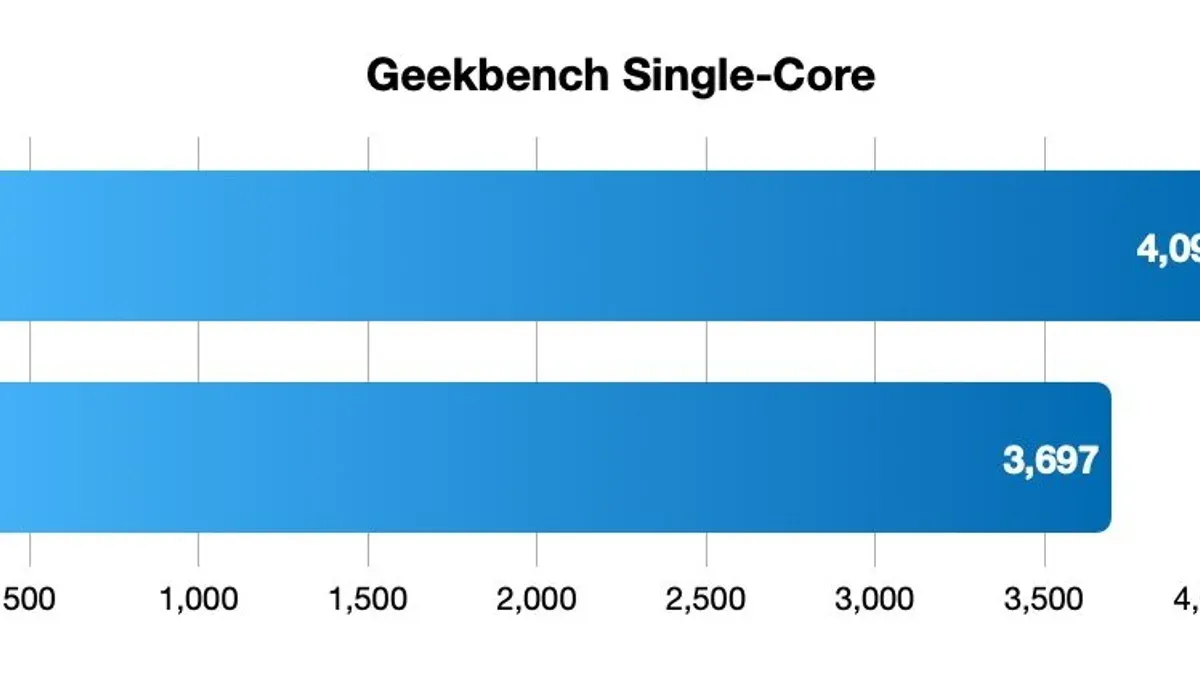
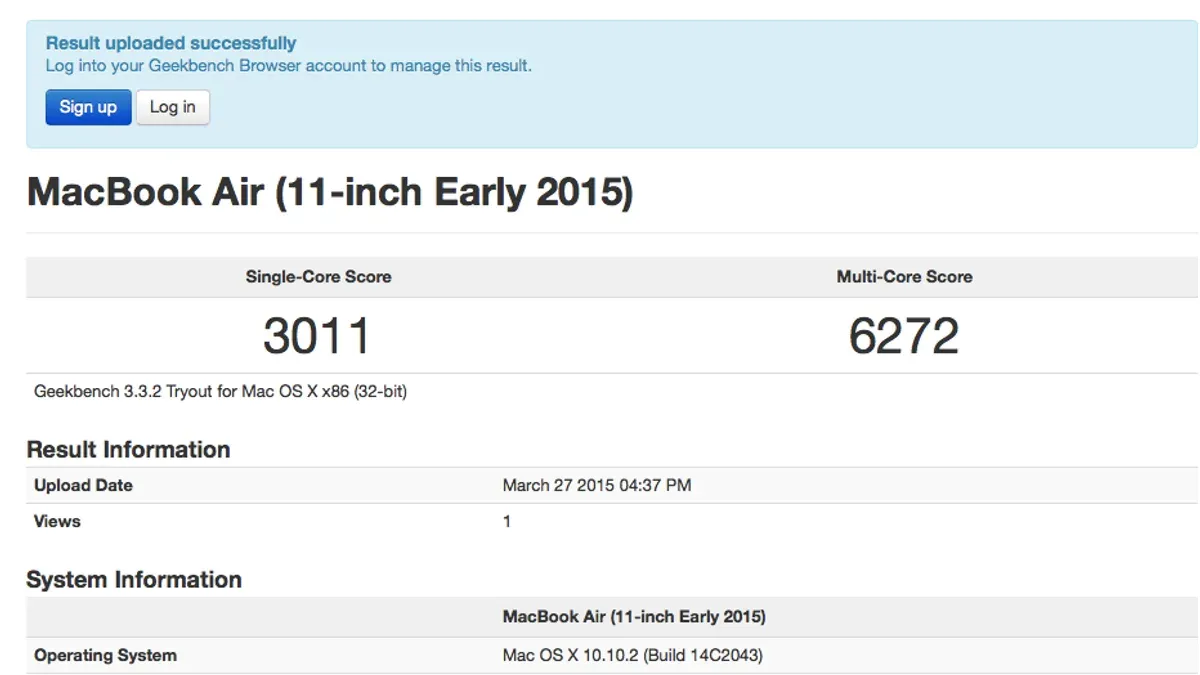
The MacBook Air 15 inch M5 typically scores around 2150 in single-core and about 7700 in multi-core tests. Compared to its predecessor, the M4, which scores roughly 1800 single-core and 6500 multi-core, the M5 offers a noticeable boost. However, chips like the M5 Pro push multi-core scores much higher, often exceeding 12,000, reflecting their design for heavier workloads.
While these Geekbench numbers provide a clear snapshot of CPU power, they don’t capture the full user experience. Factors like battery life, thermal management, and software optimization also shape how smoothly your MacBook Air runs day-to-day tasks. For example, a higher single-core score means faster app launches, but your actual experience also depends on how macOS manages background processes and power settings.
Compare the MacBook Air 15 inch M5 Geekbench score to similar Apple chips
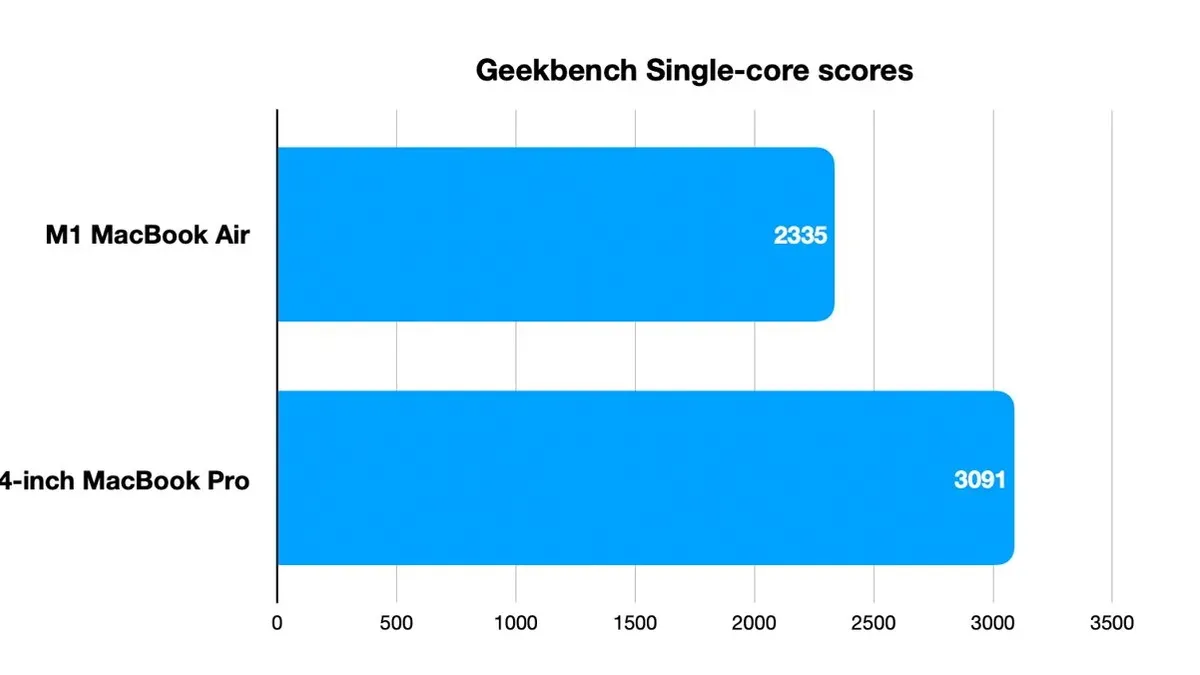
Looking at Geekbench scores side by side, the MacBook Air 15 inch M5 typically scores around 2,100 in single-core and approximately 10,000 in multi-core tests. In comparison, the MacBook Air M4 scores slightly lower, with single-core results near 1,800 and multi-core around 8,500. The MacBook Pro M5, designed for more demanding workloads, pushes these numbers higher, often reaching 2,300 single-core and 12,000 multi-core scores.
What do these differences mean for your daily activities? For web browsing and casual use, the Air M4 and M5 perform similarly, offering smooth experiences with only minor speed improvements in the M5. When it comes to video editing or software development, the MacBook Pro M5’s higher multi-core score translates into noticeably faster rendering and compilation times, which the Air M5 approaches but does not fully match.
It’s important to remember that the MacBook Air’s fanless design affects how it sustains peak performance over time. While the M5 chip shows a performance boost on short bursts, extended heavy tasks might see some throttling to avoid overheating. The MacBook Pro M5’s active cooling supports longer periods of maximum performance without dips.
| Model | Geekbench Single-Core | Geekbench Multi-Core |
|---|---|---|
| MacBook Air 15 inch M4 | ~1,800 | ~8,500 |
| MacBook Air 15 inch M5 | ~2,100 | ~10,000 |
| MacBook Pro M5 | ~2,300 | ~12,000 |
Imagine you are editing a 4K video. The MacBook Air M5 will complete the task faster than the M4, but if you regularly work with large projects or multiple apps open, the MacBook Pro M5 will handle the load more efficiently, maintaining speed throughout. This comparison helps you decide whether the Air M5’s performance boost meets your needs or if the Pro’s extra power is worth considering.
Show how the Geekbench score impacts everyday MacBook Air 15 inch M5 use
The Geekbench score translates into tangible improvements when you use common applications. For instance, higher single-core performance enhances responsiveness in apps like Safari and Mail, making web browsing and email management feel snappy and fluid. Multi-core performance benefits tasks such as video editing in iMovie or running multiple productivity apps side-by-side, reducing the time it takes to export a 4K video or handle complex spreadsheets.
Despite the strong CPU performance suggested by the Geekbench score, the MacBook Air 15 inch M5’s fanless design means it manages heat passively. This results in quieter operation and typically good battery life but can lead to slight performance throttling during extended intensive workloads. So, while the Geekbench score reflects raw processor speed, real-world battery endurance often stays robust during typical daily use, like editing documents or streaming video.
It’s also important to understand that Geekbench focuses on CPU capabilities and doesn’t fully capture GPU or storage speed impacts. For example, graphics-intensive tasks in apps like Adobe Photoshop or games depend more on the integrated GPU and SSD speed, which means your experience there might differ from what the CPU score alone suggests.
Avoid common misconceptions about Geekbench scores and MacBook Air performance
It’s easy to assume that a higher Geekbench score directly translates to a faster and smoother MacBook Air experience. However, these numbers reflect raw CPU performance under specific test conditions rather than everyday use. For instance, while the MacBook Air 15 inch M5 might score well in short bursts, sustained heavy workloads can trigger thermal throttling due to its fanless design, reducing actual speed over time.
System optimization plays a significant role beyond the CPU benchmark. macOS manages background processes, memory allocation, and power efficiently to deliver a balanced experience. This means two devices with similar Geekbench scores might feel different when running complex apps or multitasking. Synthetic benchmarks also don’t capture GPU performance, storage speed, or how software interacts with hardware in real scenarios.
Consider video editing as an example: a high CPU score might suggest fast rendering, but if the MacBook Air’s thermal limits slow the processor down during lengthy exports, the total time will be longer than expected. User reviews often highlight these gaps between benchmark results and daily performance, so it’s best to view Geekbench scores as one piece of the puzzle rather than the sole deciding factor.
Use the MacBook Air 15 inch M5 Geekbench score to choose the right Mac for your needs
When deciding if the MacBook Air 15 inch M5 fits your needs, start by matching its Geekbench score tier to your typical usage. If you’re a student handling web browsing, document editing, and streaming, the Air’s strong single-core and multi-core scores offer smooth, responsive performance at a reasonable price point. For creatives working with photo editing or light video projects, the Air’s score indicates it can handle these tasks well, though you might notice limitations during longer or more intensive workflows.
If your work involves heavy video editing, 3D rendering, or software development with demanding compiles, the MacBook Pro M5 with its higher Geekbench scores and active cooling might be a better fit, providing sustained peak performance. Consider waiting for future chip releases if you prioritize cutting-edge speed upgrades or need the highest performance for professional-grade tasks.
To decide, use this checklist: Identify your primary tasks, then compare your expected workload against the Air’s Geekbench tier. If your use matches or falls below this level, you gain good value without overspending. For example, a university student juggling essays, presentations, and occasional photo edits benefits from the Air’s CPU power and portability, while a video editor working with 4K timelines would lean toward the Pro model.
Frequently asked questions
What is a good Geekbench score for the MacBook Air 15 inch M5?
A good Geekbench score for the MacBook Air 15 inch M5 generally falls within the range that reflects strong single-core and multi-core performance typical of Apple's M-series chips. While exact numbers vary with testing conditions, scores that show smooth handling of everyday tasks like browsing, document editing, and light creative work are considered good. If the score aligns with or exceeds common benchmarks for current MacBook Air models, it indicates reliable performance for most users.
How does the MacBook Air M5 Geekbench score compare to the M4?
The MacBook Air M5 typically shows modest improvements over the M4 in Geekbench scores, reflecting enhancements in CPU efficiency and GPU capabilities. These gains translate into slightly faster processing and better multitasking, though the difference might not be dramatic for casual users. The M5’s score suggests it can handle intensive applications better than the M4 while maintaining excellent battery life.
Does the MacBook Air 15 inch M5 Geekbench score reflect real-world speed?
The Geekbench score offers a useful snapshot of processor performance but doesn’t capture every aspect of real-world speed. Factors like software optimization, thermal management, and storage speed also influence how snappy the MacBook Air feels in daily use. Generally, a high Geekbench score correlates with smooth performance in typical tasks, but it’s best to consider it alongside user experience reports and specific work scenarios.
Is the MacBook Air 15 inch M5 better than the MacBook Pro M5 based on Geekbench?
Based solely on Geekbench scores, the MacBook Pro M5 may show similar or slightly higher performance compared to the MacBook Air 15 inch M5, thanks to its active cooling system. However, the MacBook Air balances performance with portability and silent operation, which may better suit certain users. The choice depends on whether you prioritize sustained heavy workloads or a lightweight design with efficient performance.
Understand the limits of Geekbench scores
While Geekbench scores provide a useful snapshot of the MacBook Air 15 inch M5’s CPU performance under controlled conditions, they don’t tell the whole story. These scores don’t fully capture GPU capabilities, battery longevity, or how the device manages heat during extended use. For tasks like gaming, video editing, or battery-sensitive workflows, you’ll want to consider additional benchmarks and real-world reviews. Also, if your work involves highly specialized software or heavy multitasking, a higher-tier Mac model might be worth exploring.
The single most useful next step is to try the MacBook Air 15 inch M5 in person or through a trusted retailer’s demo. Pay attention to how it handles your everyday apps and workflows, check battery life under your typical usage, and notice any warmth during longer sessions. This hands-on experience will complement the Geekbench insights and help ensure the Mac you choose fits your personal needs precisely.
See also: Discover the MacBook Air 15 Inch M5 Specs: What You Need to Know · MacBook Air 15 Inch M5 Review 2026: Performance, Value, and Comparison · MacBook Air 15 inch M5 Release Date: What You Need to Know in 2026 · Does the MacBook Air M5 Get Hot? A Clear Guide to Heat and Performance