How to Export Passwords to CSV in Passwords App: A Clear Step-by-Step Guide
This guide shows you how to export passwords to CSV in Passwords app securely and step-by-step for easy backup or transfer.
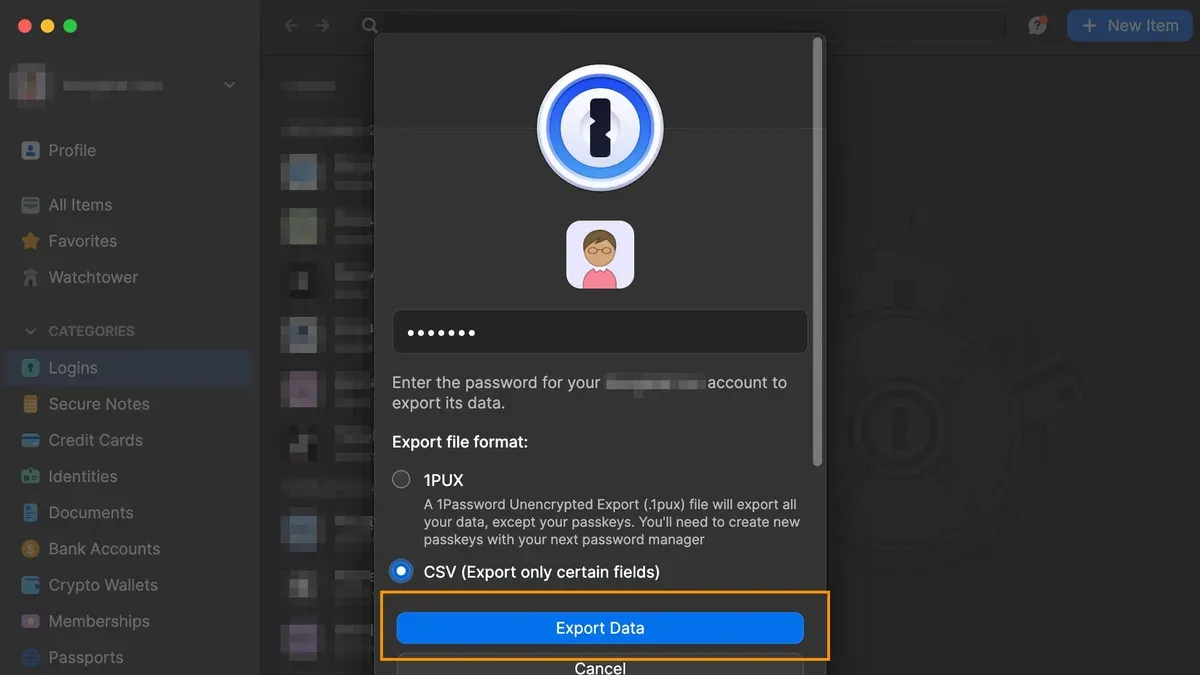
You have several passwords saved in the Passwords app and want to create a backup or move them to another device. Exporting these passwords to a CSV file can make this task easier, but it requires careful steps to ensure security and accuracy.
This article guides you through how to export passwords to CSV in Passwords app with clear, step-by-step instructions. You will learn how to locate the export option, authenticate safely, complete the export process, and manage the exported CSV file securely. Additionally, common troubleshooting tips will help you avoid or resolve potential issues along the way.
Key takeaways
- Ensure you have access to the Passwords app and device authentication before starting the export.
- Use the app’s export feature under Settings > Passwords > Export Passwords to create the CSV file.
- Always keep the exported CSV file in a secure location to prevent unauthorized access.
- If you encounter errors, check app permissions and device security settings first.
Before You Start: What You Need to Export Passwords
Before exporting your passwords, make sure you have access to the device where the Passwords app is installed and unlocked. You will need the latest version of the Passwords app as well as the minimum supported operating system version, which typically is iOS 15 or later, or Android 12 and above, depending on your device. Check your app version under Settings > About to confirm it meets the required version, generally version 5.0 or newer for export features.
Understand that exporting passwords creates an unencrypted CSV file, which can expose sensitive data if mishandled. Only proceed if you have a secure location ready for saving this file. Examples of secure storage include an encrypted external drive, a password-protected folder, or a secure cloud storage service with strong encryption.
Finally, be prepared to authenticate using your device passcode, Face ID, Touch ID, or other biometric methods when prompted to confirm the export. This step protects your passwords from unauthorized access during the export process.
- Verify your device is unlocked and the Passwords app is open. You should see your saved password list.
- Confirm your Passwords app version is 5.0 or higher by navigating to Settings > About. The version number will be displayed.
- Check your device OS version in Settings > General > About to ensure it is iOS 15/Android 12 or above. This ensures compatibility with export features.
- Prepare a secure storage location, such as an encrypted external drive or a trusted cloud folder with encryption enabled, where you will save the exported CSV file.
- Have your device authentication method ready (passcode, Face ID, Touch ID) for the upcoming export confirmation prompt.
Open the Passwords App and Locate Export Option
To begin exporting your passwords, you first need to open the Passwords app on your device. Look for the app icon labeled "Passwords" or a key symbol, which is typically found on your home screen or within your apps list. Once open, you'll want to access the app’s main menu to find the export functions.
Navigate to the settings or options menu, often represented by a gear icon or three dots in the top-right corner. This menu contains all the management features for your saved passwords. Selecting this will open a list of options related to password management.
Within this menu, locate the feature labeled "Export Passwords" or "Export Data." This option is usually clearly marked to avoid confusion, sometimes accompanied by an export or share icon. Selecting it will take you to the next step in the export process.
- Open the Passwords app on your device.
You should see the main interface showing your saved passwords. - Tap the settings or options icon, typically a gear or three vertical dots.
A menu listing various password management options will appear. - Find and select the "Export Passwords" or "Export Data" option.
This opens the export interface, ready for authentication and confirmation steps.
Following these steps ensures you are correctly positioned to export your password data without accidentally navigating away or missing the correct option. Taking your time to recognize each icon and label will reduce errors and confusion.
Authenticate and Confirm Export Permissions
When you initiate the export of your passwords, the app requires you to verify your identity to protect your sensitive data. This authentication usually involves entering your device passcode, or using biometric methods such as Face ID or Touch ID, depending on your device capabilities and settings. This step ensures that only you, or an authorized user, can access and export the password information, preventing unauthorized access.
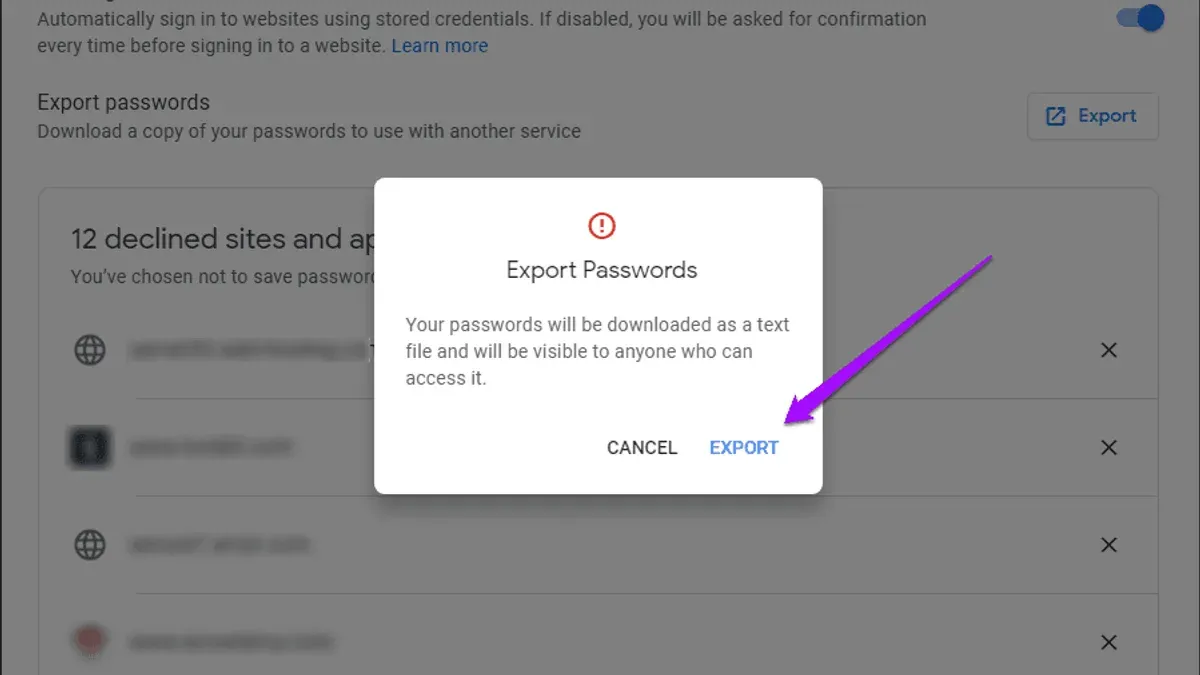
During this process, you will see a prompt asking you to confirm your identity. For example, a message might say, "Authenticate to allow password export" with options to use Face ID or enter your passcode. After successful authentication, the app will request your permission to proceed with exporting the password data. This permission is necessary because exporting passwords to a CSV file creates a plain-text document that could be vulnerable if mishandled.
Be attentive to any warnings or security prompts, such as alerts about the risks of storing passwords in an unencrypted format or reminders to keep the exported file secure. These prompts help you understand the implications of exporting passwords and encourage you to proceed carefully.
- Tap the export passwords option in the app settings. You will see a prompt asking to authenticate.
Successful result: A Face ID or Touch ID prompt appears, or a passcode entry field opens. - Authenticate using your preferred method: scan your face, use your fingerprint, or enter your device passcode.
Successful result: The app confirms your identity and moves to the next confirmation screen. - Review the export permission prompt explaining the risks and confirming you want to export passwords.
Successful result: An "Allow" or "Confirm" button becomes available for you to proceed. - Tap "Allow" or "Confirm" to grant the app permission to create the CSV file.
Successful result: The export process starts, and you will be guided to save the CSV file securely.
Export Passwords to CSV File Step-by-Step
- Tap the Export Format dropdown and select CSV explicitly. You should see the format clearly marked before proceeding.
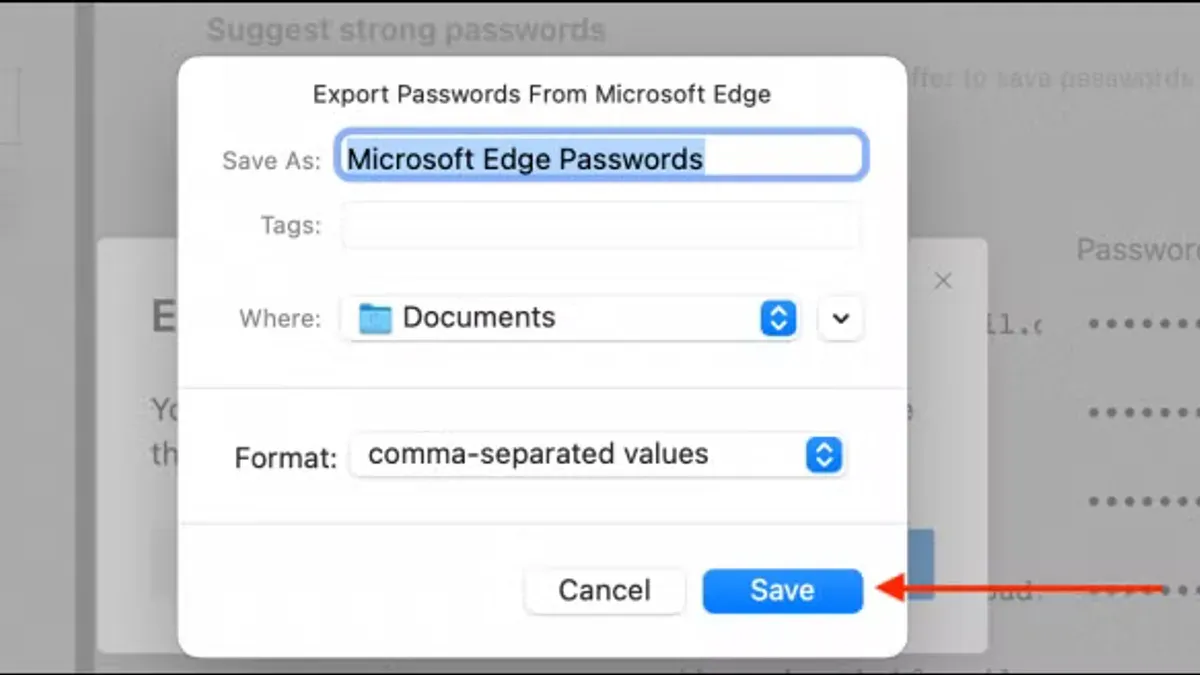
- Choose the destination folder or location on your device or cloud storage where the CSV file will be saved. A prompt or file browser will appear to help you pick a secure, easily accessible spot.
- Confirm the export action by tapping the Export or Save button. A progress indicator typically appears, showing the export status; wait until it reaches 100% or displays a completion message.
- Immediately after export, move the CSV file to a secure location such as an encrypted folder or external drive. Avoid leaving it in shared or public directories to maintain your password security.
Once complete, the exported CSV file contains rows representing each saved password entry. Columns include fields like Website, Username, and Password, though sensitive details are redacted in this example:
| Website | Username | Password |
|---|---|---|
| example.com | user123 | •••••••• |
| mailservice.net | myemail | •••••••• |
Securely Manage Your Exported CSV File
Exported password files in CSV format are stored as plain text, making them highly vulnerable to unauthorized access. Data breaches caused by exposed plaintext password files have resulted in significant security compromises, emphasizing the need to handle such files with great care. To protect your sensitive data, consider encrypting the CSV file using tools like VeraCrypt, BitLocker, or password-protected ZIP archives before storing it anywhere.
Storing the encrypted or unencrypted CSV file on secure, access-controlled locations such as encrypted external drives or trusted cloud storage with robust encryption and two-factor authentication reduces the risk of exposure. Avoid leaving CSV files in common folders or on shared devices where others might access them easily.
Once you have completed your backup, migration, or audit, delete the CSV file promptly to minimize any lingering risk. Permanently remove it from the recycle bin or trash to ensure it cannot be recovered.
If security is a primary concern, consider alternatives to exporting passwords as CSV, such as using the app’s built-in sync or export to encrypted formats supported by password managers, which mitigate plaintext exposure risks.
Troubleshoot Common Export Issues
If you find the export option missing or greyed out, first ensure your device and app are fully updated. Sometimes, outdated software restricts access to export features. If authentication repeatedly fails or prompts keep appearing, check that your passcode or biometric settings are functioning correctly in your device’s security settings.
When exporting results in incomplete or corrupted CSV files, verify that there is enough free storage space and that the file destination supports writing new files. Also, close other apps that might interfere with the export process. If error messages such as "Export failed," "Authentication error," or "File save error" appear, they often indicate permissions or storage issues.
Resolving most export problems involves updating your app and operating system to the latest version. If issues persist after updates and troubleshooting, contacting the app’s support team is advisable. Professional help may be necessary when errors remain unexplained or data integrity is compromised.
- Check for app and OS updates and install any available updates. You should see the export option enabled afterward.
- Restart your device to refresh system processes. The export function should respond normally after reboot.
- Verify your authentication settings in device security preferences. Successful verification stops repeated prompts.
- Ensure sufficient storage exists in your chosen save location. You can save new files without errors.
- Try exporting again. If the CSV file opens correctly with all data intact, the problem is resolved.
- If problems continue, gather error messages and contact support with detailed information for further assistance.
Frequently asked questions
Is it safe to export passwords to a CSV file?
Exporting passwords to a CSV file carries risks because the file is typically unencrypted and can be accessed by anyone with access to your device or backup locations. To minimize risks, immediately move the CSV file to a secure location, avoid sharing it via unsecured methods, and delete it once you've completed your task. Consider encrypting the file with third-party tools if you plan to store it for any length of time.
Can I export passwords from the Passwords app on any device?
Exporting passwords depends on the device and operating system you are using. Some versions of the Passwords app on mobile devices may restrict export functionality due to security policies, while desktop or laptop versions often provide full export options. Check your device’s app settings and system permissions to confirm if export is supported.
What should I do if I lose the exported CSV file?
If you lose the exported CSV file, treat it as a potential security breach and change the passwords contained within it as soon as possible. Since the file is unencrypted, anyone who finds it could misuse your credentials. Also, review your device’s security settings to prevent future accidental losses.
Can I import the CSV file back into the Passwords app later?
Importing passwords from a CSV file depends on your Passwords app’s features. Some apps allow importing CSV files directly through settings or password management sections, while others may not support this. Verify your app’s documentation or support resources to ensure you use the correct format and procedure for importing.
What This Guide Does Not Cover
This guide focuses specifically on exporting passwords from the built-in Passwords app to a CSV file. It does not include instructions for exporting passwords from third-party password managers or web browsers, nor does it cover automated syncing or cloud backup options. If you have limited confidence in the security of your device or do not have a secure storage method for the exported CSV file, you should reconsider exporting passwords this way. In those cases, consider using encrypted vaults or dedicated password management tools that provide safer export and transfer options.
Remember, exporting passwords to a CSV file creates an unencrypted file that can be easily accessed if your device or storage medium is compromised. Always prioritize security and only proceed if you have a clear plan for protecting your data.
The most useful next step is to immediately transfer your exported CSV file to a secure location, such as an encrypted external drive or a trusted password manager import function, and then permanently delete the CSV from your device. This practice minimizes the risk of accidental exposure and keeps your sensitive information safer.
See also: How to Import Passwords from Chrome to Apple Passwords App · How to Find Weak Passwords in the Passwords App: Step-by-Step Guide · How to Share Passwords with Family in the Passwords App · How to Set Up Verification Codes in the Passwords App: A Step-by-Step Guide